Style Guide · Updated July 2026
Backyard fence ideas that actually work.
12 backyard fence styles ranked by privacy, cost, lifespan, and curb appeal — with the trade-offs we tell Kansas City homeowners in person before they sign a contract.
Not sure which style fits?
We'll walk your yard and recommend a style that fits the home, the HOA, and your budget.
Index
12 backyard fence ideas.
- 016 ft cedar board-on-board privacy
- 02Horizontal cedar (modern)
- 036 ft cedar shadowbox (alternating)
- 044 ft black ornamental aluminum
- 056 ft white or tan vinyl privacy
- 06Black vinyl-coated chain link
- 07Mixed-height (6 ft privacy + 4 ft ornamental)
- 086 ft cedar dog-ear (budget classic)
- 09Fence + pergola combo
- 103–4 ft cedar or vinyl picket (garden fence)
- 11Estate fence with stone or brick columns
- 12Racked fence for steep or sloped yards
01 / Idea
6 ft cedar board-on-board privacy
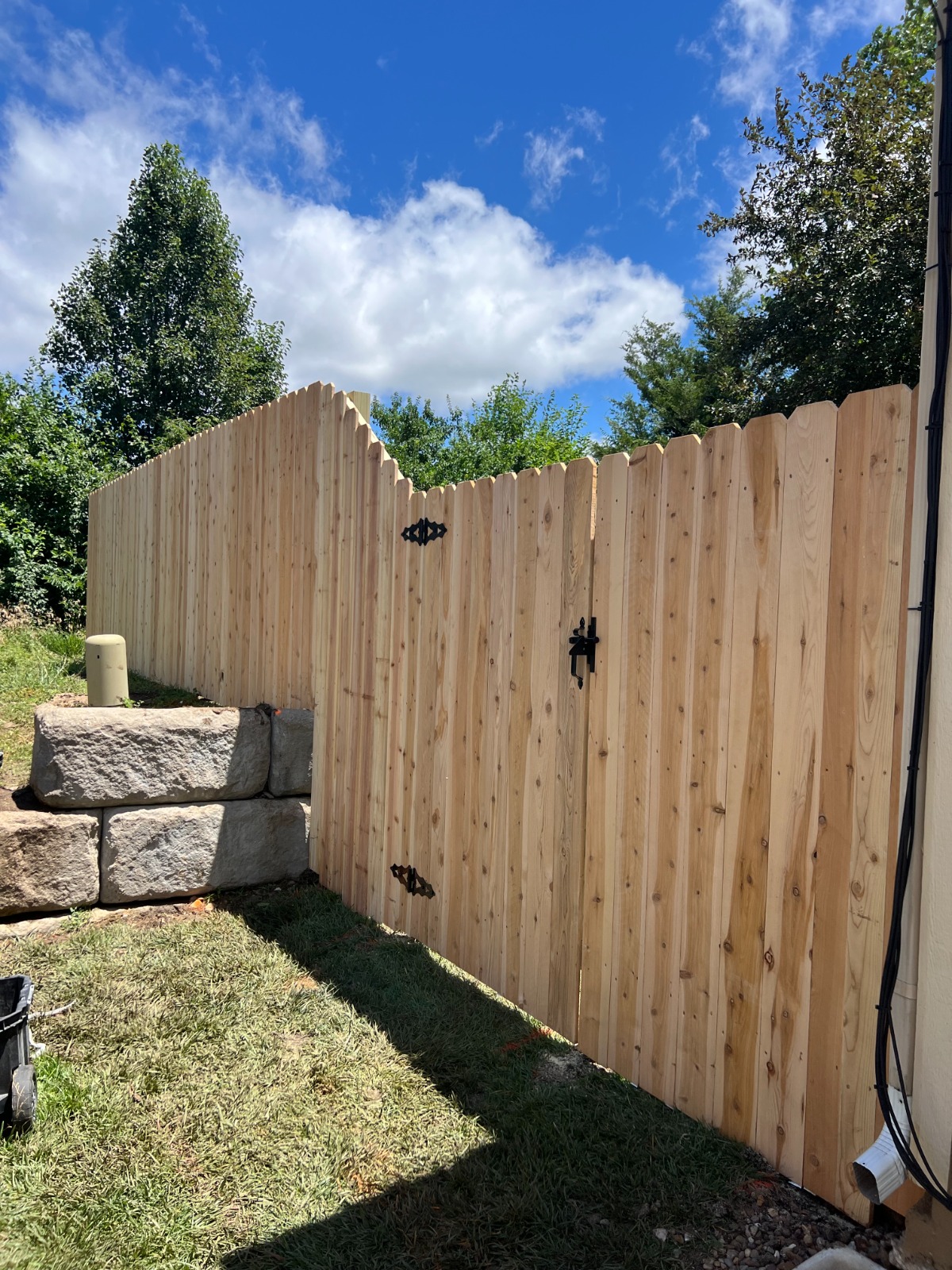
The KC metro classic. Full privacy, finished both sides, and ages to a soft silver-gray.
- Privacy
- Cost
- $$
- Lifespan
- 18–25 years with a stain refresh every 4–5 years
- Best for
- Suburban backyards with HOA rules requiring 'good-neighbor' fences.
Why it works: Overlapping pickets kill line-of-sight even after cedar shrinks, and both faces look finished — the single most-requested backyard style we install across Overland Park, Olathe, and Lee's Summit.
Watch out: Skip the pre-built panels. Stick-built with steel posts costs about 15% more up front and lasts twice as long.
02 / Idea
Horizontal cedar (modern)
Clean, architectural, and everywhere in Prairie Village, Brookside, and Waldo remodels.
- Privacy
- Cost
- $$$
- Lifespan
- 15–20 years — horizontal boards trap more moisture on top edges
- Best for
- Mid-century and modern homes; small backyards where a strong horizontal line makes the yard feel wider.
Why it works: Reads as high-end without going custom. Pairs beautifully with black steel posts and gravel-strip landscaping.
Watch out: Requires premium clear cedar (no knots that bow). Budget 25–35% over standard vertical cedar.
03 / Idea
6 ft cedar shadowbox (alternating)
Alternating pickets on each side of the rail — some airflow, still private from most angles.
- Privacy
- Cost
- $$
- Lifespan
- 20+ years — airflow prevents rot
- Best for
- Windy lots, corner lots, and HOAs that specifically call out shadowbox.
Why it works: The airflow is the point. Fewer blowdowns in KC's spring storms and a much longer life than solid privacy on exposed lots.
Watch out: Not fully private up close — angles allow a peek. If total privacy is the goal, pick board-on-board instead.
04 / Idea
4 ft black ornamental aluminum
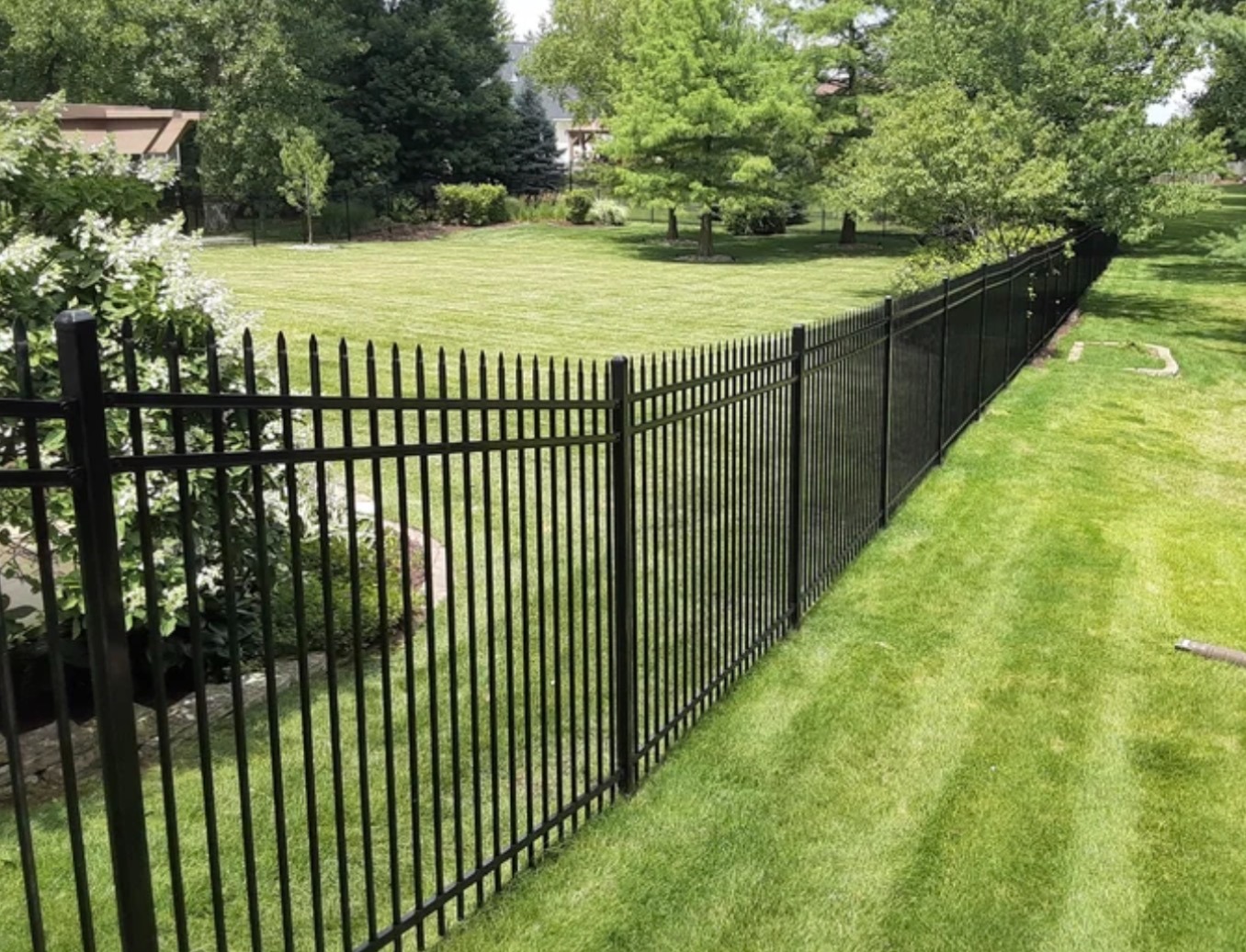
The default around pools and along the see-through portion of front yards.
- Privacy
- Cost
- $$
- Lifespan
- 40+ years, never needs paint
- Best for
- Pool enclosures (BOCA code compliant), golf-course lots, and HOA front-yard fencing.
Why it works: Disappears visually — it protects without blocking the view. Powder-coated black is the metro-wide default and passes almost every HOA on the first submittal.
Watch out: Zero privacy. Pair with landscaping (arborvitae, hydrangea) if you want screening without a second fence.
05 / Idea
6 ft white or tan vinyl privacy
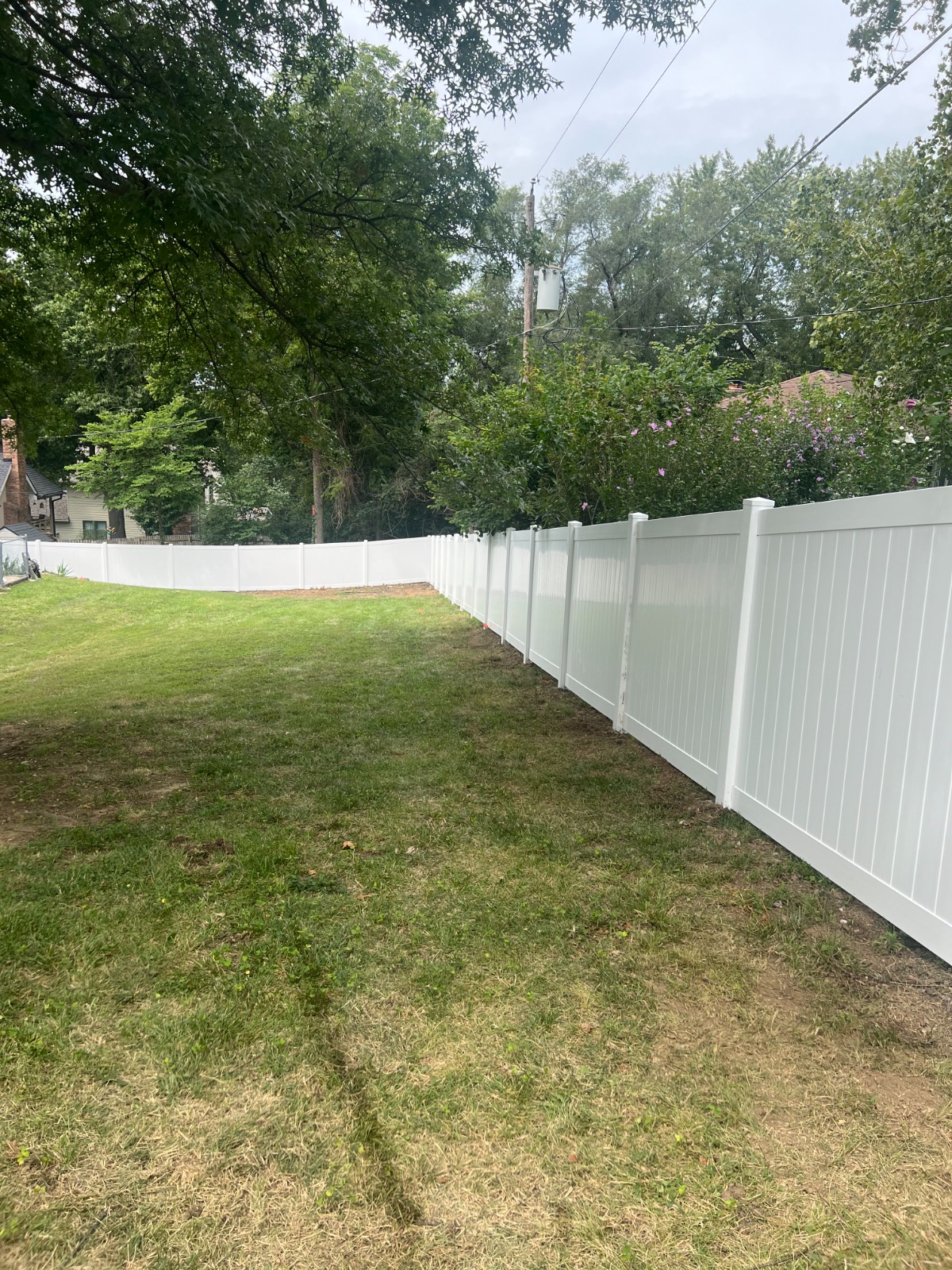
Zero maintenance, matches new-construction siding, popular in south OP and Olathe.
- Privacy
- Cost
- $$$
- Lifespan
- 25–30 years, warranty-backed
- Best for
- Homeowners who don't want to stain, ever. Newer subdivisions with matching neighbor fences.
Why it works: Uniform look that doesn't fade, warp, or need a power-washer. Higher up-front cost pays back around year 8 vs cedar with staining.
Watch out: Cheap vinyl yellows in KC's sun and cracks in a hard freeze. Buy a name-brand ASTM-rated product or don't buy vinyl at all.
06 / Idea
Black vinyl-coated chain link
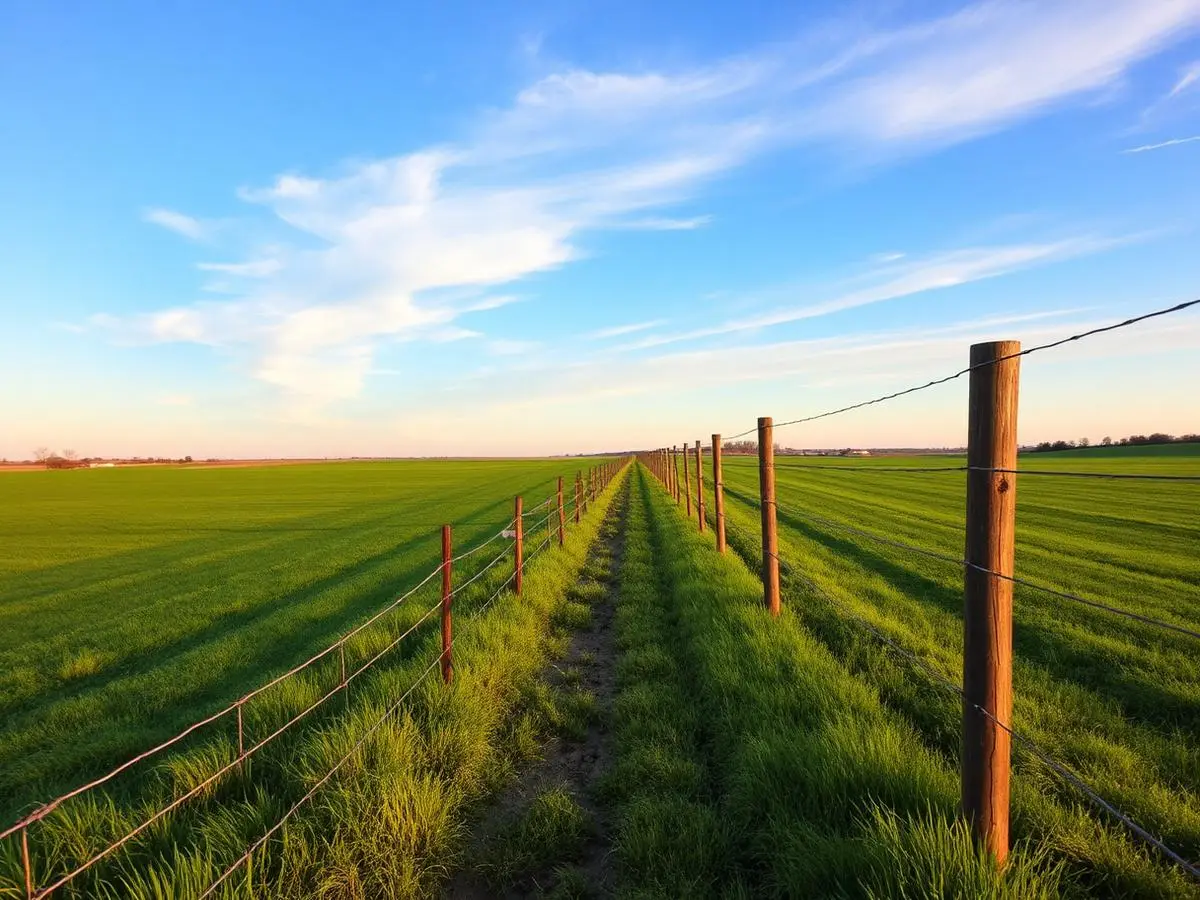
The dog-owner favorite. Full visibility, tough, and much less industrial than galvanized.
- Privacy
- Cost
- $
- Lifespan
- 20–25 years
- Best for
- Interior backyards with dogs, kids, and lots of open lawn. Homes where you want to see the yard from the deck.
Why it works: Black coating recedes visually the same way ornamental aluminum does — from 20 feet away you barely see it, which is the opposite of galvanized silver.
Watch out: HOAs often ban it in front yards. Stick to backyard-only unless you've cleared it in writing.
07 / Idea
Mixed-height (6 ft privacy + 4 ft ornamental)
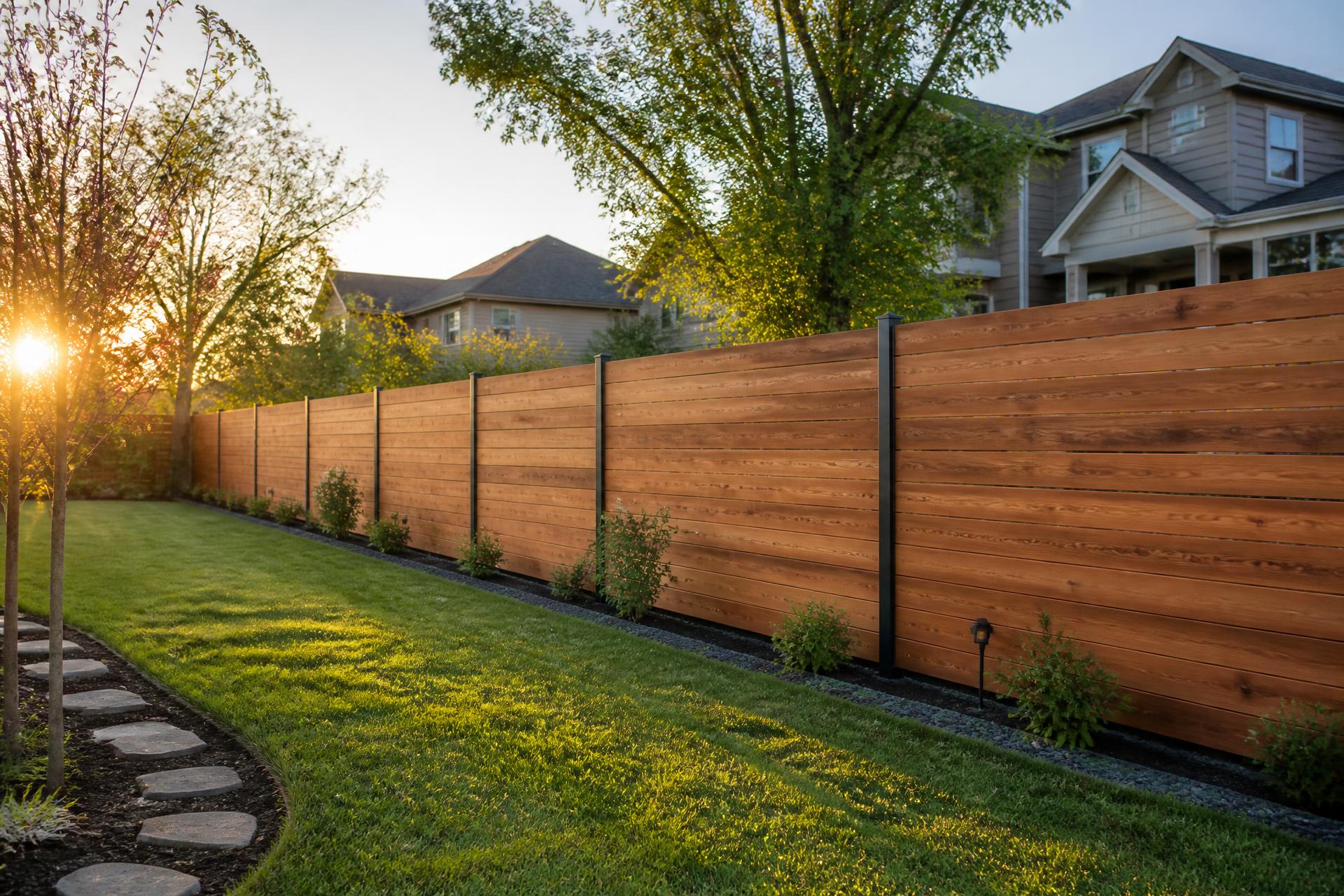
6 ft cedar along neighbor lines, 4 ft aluminum along the street side.
- Privacy
- Cost
- $$$
- Lifespan
- Follows the shorter-lived material (usually cedar)
- Best for
- Corner lots, walkout basements, and homes on busy streets where the front third has to stay see-through.
Why it works: Solves the HOA front-yard rule without three separate contractors. One design, one install day, one warranty.
Watch out: The transition post is the weak point — insist on a shared steel post with matching caps on both sides.
08 / Idea
6 ft cedar dog-ear (budget classic)
The cheapest wood privacy fence that still looks decent — the default for 1980s KC subdivisions.
- Privacy
- Cost
- $
- Lifespan
- 12–15 years
- Best for
- Rental properties, tight budgets, and interior yards where the finished-side rule doesn't apply.
Why it works: Lowest-cost privacy per linear foot. Fine for a starter home or a rental — just know the pickets shrink and gaps open by year 3.
Watch out: Skip the big-box panels. Stick-built with 4x4 cedar posts adds ~$4/ft and doubles the lifespan.
09 / Idea
Fence + pergola combo
A cedar privacy fence that turns into a corner pergola over a patio or seating area.
- Privacy
- Cost
- $$$
- Lifespan
- Same as the fence (15–20 years)
- Best for
- Small backyards where the fence and the shade structure share posts.
Why it works: Shared steel posts mean the whole structure is engineered once. Cheaper than a fence and a standalone pergola.
Watch out: Needs a real drawing before install — pergolas require deeper footings and, in most cities, a separate structure permit.
10 / Idea
3–4 ft cedar or vinyl picket (garden fence)
The short, decorative fence — for garden beds, front-yard cottages, or dog runs inside a bigger yard.
- Privacy
- Cost
- $
- Lifespan
- 10–15 years cedar, 25+ years vinyl
- Best for
- Historic Waldo and Brookside cottages; front-yard flower gardens; small pet enclosures.
Why it works: Adds charm without blocking sightlines. In front yards, a 3 ft picket is usually approved even where taller fencing is banned.
Watch out: Not tall enough for medium/large dogs. Add an interior line if you need containment.
11 / Idea
Estate fence with stone or brick columns
Ornamental aluminum panels between brick or stone columns — the Leawood driveway-entrance look.
- Privacy
- Cost
- $$$
- Lifespan
- 50+ years
- Best for
- Larger lots with a formal front entry; long driveways; homes where the fence is part of the architecture.
Why it works: The highest curb-appeal fence style in the metro. Column work anchors the fence visually and adds real resale value.
Watch out: Column footings must go below frost line (~36" in KC) — cheap column work heaves and cracks within 2 winters.
12 / Idea
Racked fence for steep or sloped yards
Fence panels that follow the grade — no stair-stepping, no triangular gaps under the bottom rail.
- Privacy
- Cost
- $$
- Lifespan
- Matches the material (cedar or vinyl)
- Best for
- Walkouts, terraced backyards, and any lot with more than 6" of grade change per section.
Why it works: Eliminates the ugly gaps that let pets escape under a stepped fence. Clean look on hillside lots.
Watch out: Racking is a build technique, not a product. Confirm the installer racks in the field — cheap crews will stair-step and hope you don't notice.
FAQ
Backyard fence questions we hear every week.
- For full backyard privacy in the Kansas City metro, 6 ft cedar board-on-board is the best-value choice — it looks finished on both sides, meets almost every HOA's requirements, and lasts 18–25 years with periodic staining. Vinyl privacy at the same height lasts longer (25–30 years) with zero maintenance, but costs 30–50% more up front.Copy link to this answer
- Most Kansas City backyard fences fall between $25 and $65 per linear foot installed in 2026. 6 ft cedar dog-ear runs about $25–35/ft; cedar board-on-board $35–48/ft; vinyl privacy $45–65/ft; ornamental aluminum $40–55/ft; black chain link $18–28/ft. Steel posts, gate hardware, permits, and lot grading affect the final number.Copy link to this answer
- 6 ft cedar privacy — dog-ear in older subdivisions and board-on-board in newer HOA-controlled ones — is by far the most common backyard fence style across the KC metro. Black ornamental aluminum dominates pool and front-yard applications, and vinyl is growing quickly in newer south Overland Park and Olathe neighborhoods.Copy link to this answer
- Most KC metro cities require a permit for any fence over 4 ft, and many HOAs require architectural approval before the permit is pulled. Overland Park, Leawood, Olathe, Lee's Summit, Liberty, and Prairie Village all enforce their own setback and material rules — plan on 1–3 weeks for HOA review and 3–10 business days for the city permit.Copy link to this answer
- Black vinyl-coated chain link is the most dog-friendly backyard fence — full visibility for the dog, tough enough for jumpers and diggers, and much less industrial-looking than galvanized. If privacy also matters, 6 ft cedar board-on-board with a concrete or gravel bottom rail keeps most dogs contained without a dig-out.Copy link to this answer
- Pick cedar (dog-ear or board-on-board) if up-front cost matters and you don't mind staining every 4–5 years. Pick vinyl if you want a set-it-and-forget-it fence and can spend 30–50% more up front. Pick ornamental aluminum around pools, along golf-course frontages, and in HOA-restricted front yards where see-through fencing is required.Copy link to this answer
Ready to fence your property the right way?
Financing Available